Embracing Surprise Through Color and Experimentation
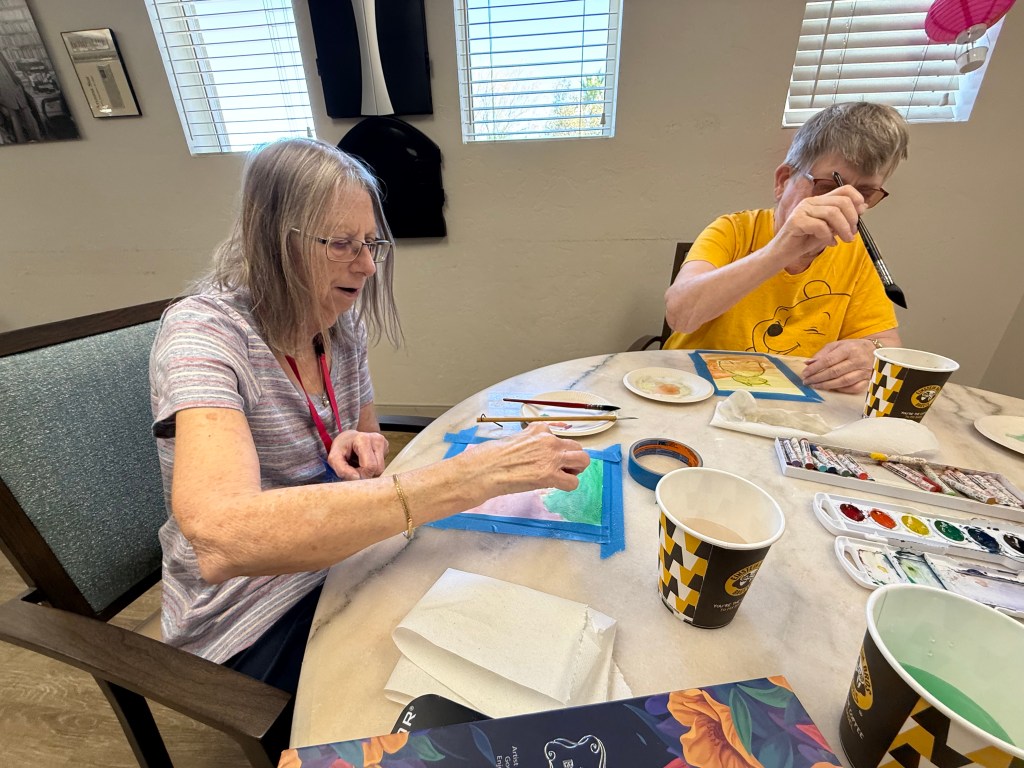
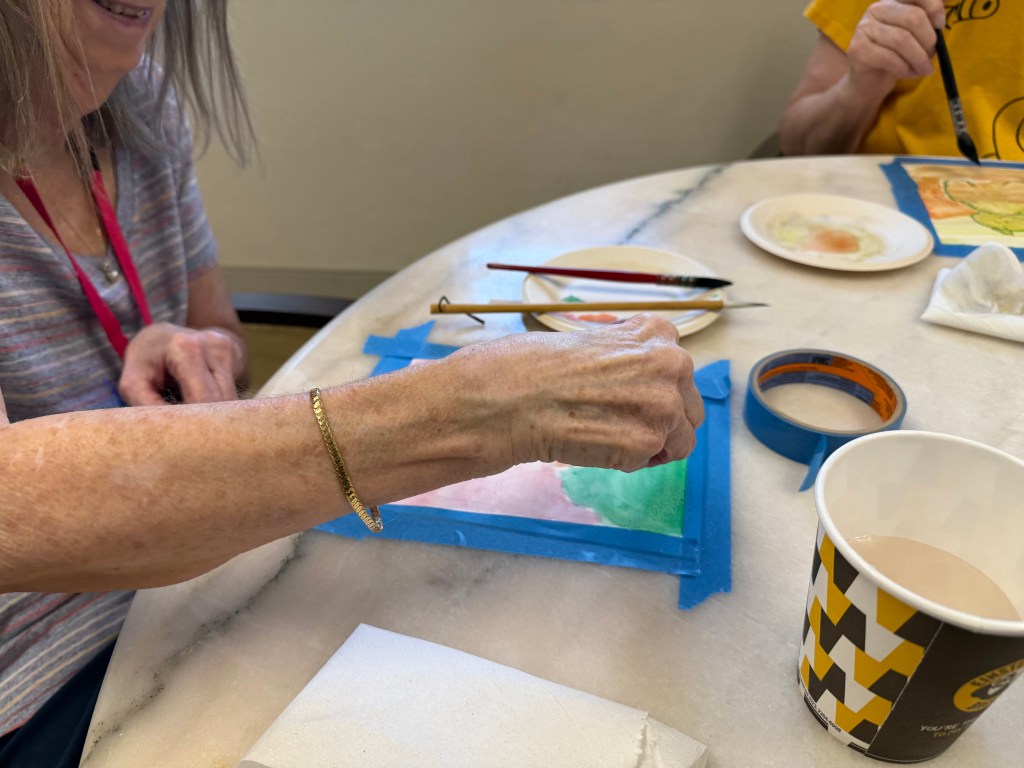
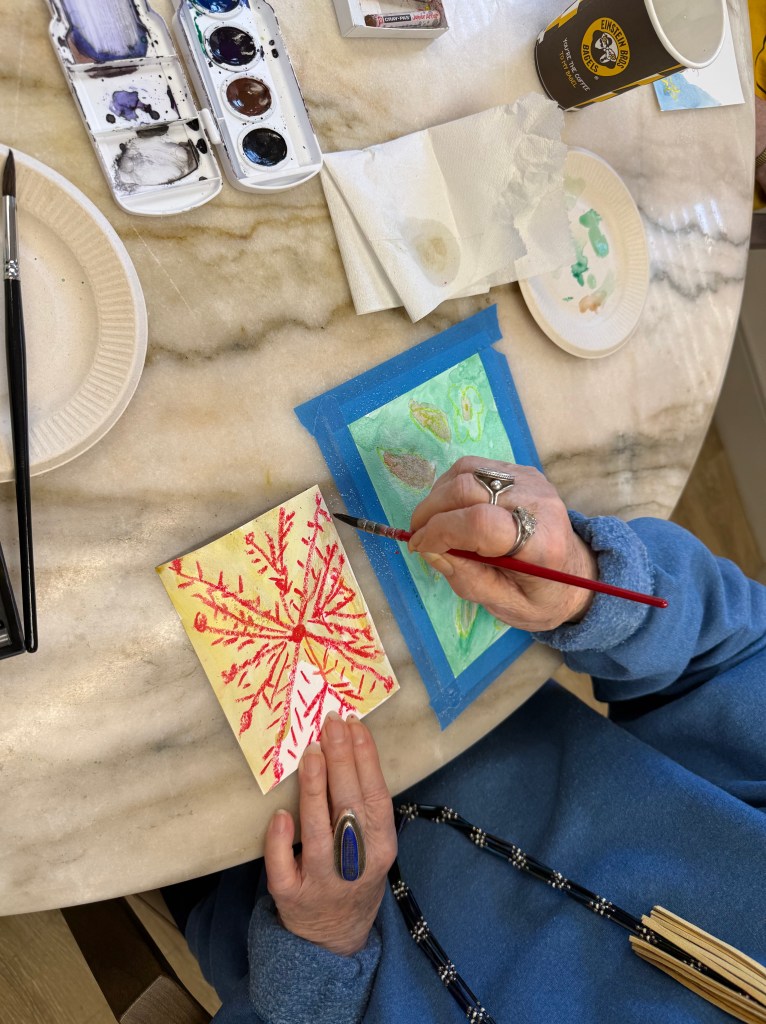
This week, participants explored watercolor painting using wet-on-wet techniques and salt to create textures and unexpected visual effects. For many residents, this was their first experience experimenting with watercolor in this way. The activity invited them to play with color, observe how materials interacted, and respond creatively to unexpected outcomes.
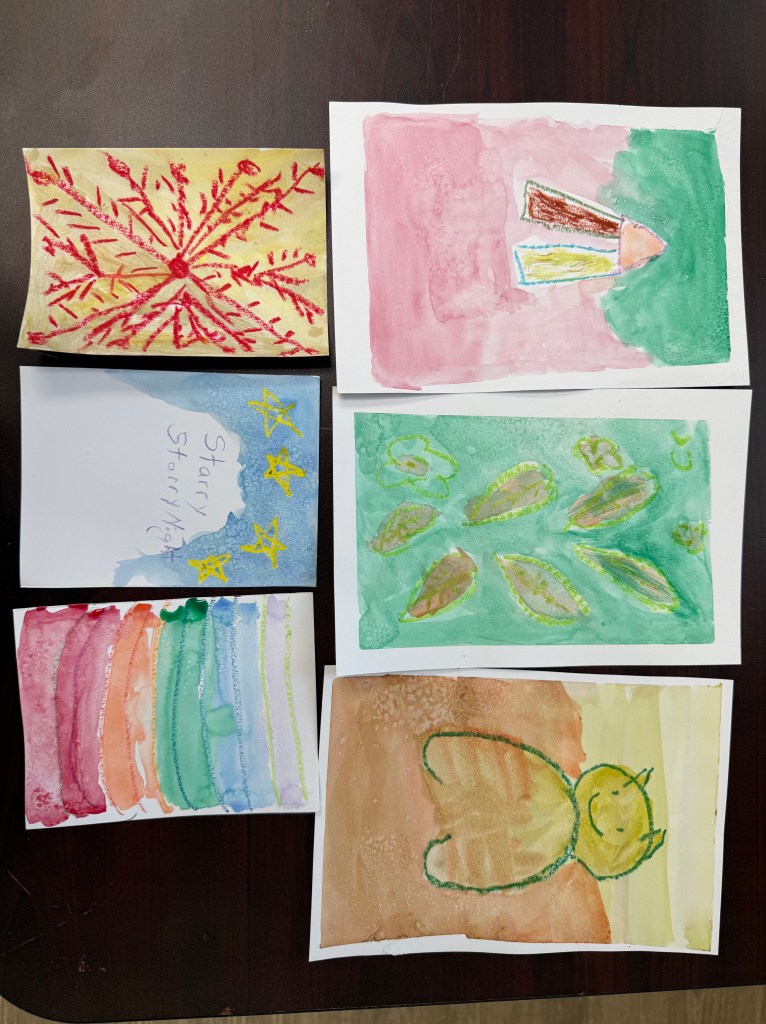
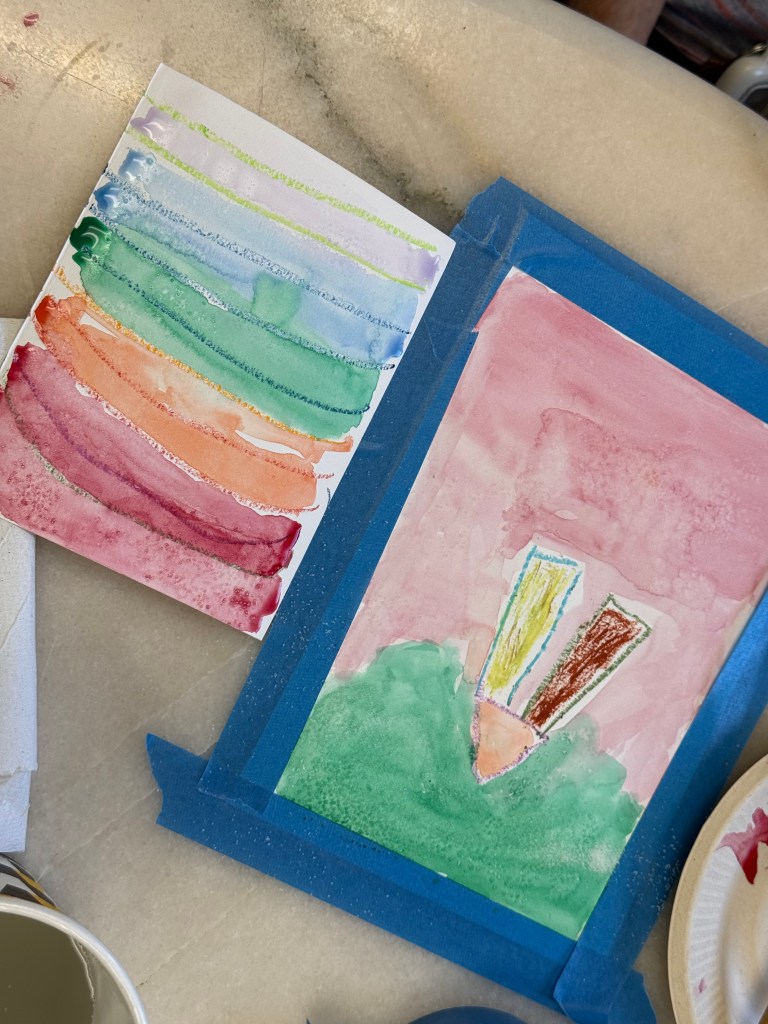
As colors spread across the paper and salt began transforming the painted surfaces, participants watched with curiosity and excitement. Many commented on the changing patterns and textures that emerged as the paintings dried. The process encouraged experimentation, and there was a sense of anticipation each time a new effect appeared.
What was especially meaningful was the confidence participants demonstrated throughout the session. Some residents initially expressed uncertainty, saying they were “not artists” or that they did not know how watercolor worked. As the activity continued, however, they became increasingly engaged in making choices about color, composition, and texture. Participants shared their discoveries with one another, offered encouragement, and proudly displayed their finished works.
Several participants created highly personal interpretations. One resident incorporated stars into her painting, connecting the activity to memories and imagination. Others experimented freely with abstract forms and color combinations, embracing the unexpected nature of the materials. There was no single correct outcome, and this openness appeared to create a space where participants felt comfortable taking creative risks.
What stood out most was how the session supported a sense of agency and accomplishment. Participants were not simply following instructions; they were making decisions, solving creative problems, and developing their own visual responses. The artworks reflected individual preferences, experiences, and ways of seeing the world.
Research Reflection
This week’s session reminded me that meaningful art experiences are not defined by technical skill but by opportunities for expression, exploration, and participation. The watercolor process encouraged residents to trust their own decisions and engage with unfamiliar materials in ways that felt playful and rewarding.
I was particularly struck by the pride participants showed when sharing their paintings. Moments like these challenge common assumptions that older adults are passive recipients of care. Throughout the session, residents demonstrated curiosity, creativity, adaptability, and imagination. Their willingness to experiment and embrace uncertainty revealed strengths that are often overlooked in conversations about aging.
As an educator and researcher, I continue to see how art-making can create spaces where older adults feel heard, valued, and respected. Through simple creative activities, participants are able to express individuality, exercise choice, and contribute their own ideas. These moments of creative agency are becoming an important part of understanding how relational care is experienced and practiced within community-based art settings.
 LEIWANG ARTPARK
Leave a comment